

Riding the Seasonal Shifts: Emotional Balance Through Acupuncture and Chinese Medicine
As the seasons change, many people notice shift in their moods—a surge of irritability in early spring, restlessness in summer heat, a subtle melancholy as leaves turn in autumn, or a deep fatigue when winter sets in. Western medicine often attributes these shifts to changes in sunlight and circadian rhythms. Traditional Chinese Medicine (TCM), however, views these emotional shifts as natural responses to the shifting energies of the earth and cosmos.
In TCM, mind and body are inseparable. Emotional states are directly linked to organ systems, energetic pathways (meridians), and the surrounding environment. By aligning body and mind with seasonal cycles, acupuncture and Chinese herbal medicine offer a time-tested approach to emotional regulation.
The Mind-Body Connection in Chinese Medicine
In TCM philosophy, emotional expression is a natural byproduct of living. Emotions only become a source of illness or imbalance when they are suppressed, experienced excessively, or held onto for too long.
Central to this framework is Five Element Theory (Wu Xing), which maps the natural world—seasons, elements, directions—directly to internal organs and specific emotional expressions.
When seasonal shifts occur, the body must adjust its internal energy (Qi). If an organ system is already weakened or blocked, these transition periods can manifest as heightened emotional reactivity.
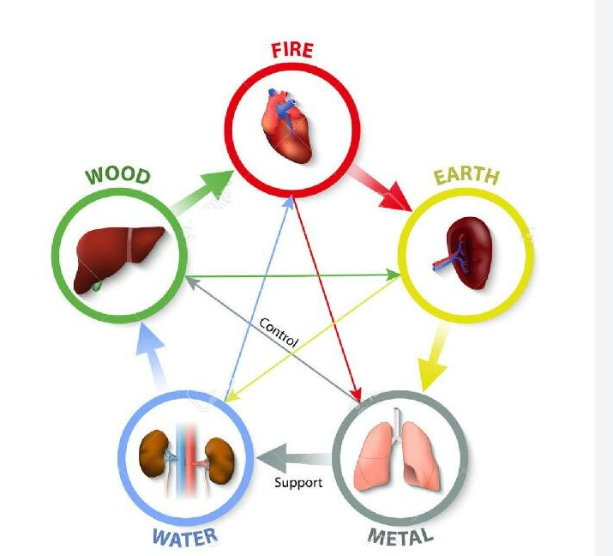
How Acupuncture Regulates Emotional Transitions
Acupuncture works by stimulating precise points along the meridian mooth the flow of Qi and calm the nervous system. From a modern scientific perspective, acupuncture triggers the release of endorphins, regulates the hypothalamic-pituitary-adrenal (HPA) axis, and shifts the body from a sympathetic ("fight-or-flight") state into a parasympathetic ("rest-and-digest") state.
Here is how TCM addresses emotional health across the seasonal landscape:
1. Spring: Unblocking the Liver Qi
Spring represents growth and movement. When Liver Qi becomes stagnant—often due to stress or physical inactivity during winter—it creates internal pressure. Acupuncture points like LV 3 (Taichong) on the foot help unblock stagnant energy, smoothing out sudden bursts of anger, impatience, and frustration.
2. Summer: Calming the Heart Spirit (Shen)
Summer brings high heat and intense activity, which can over-stimulate the Heart. In TCM, the Heart houses the Shen (spirit or mind). When Heart Fire flares, anxiety, agitation, and racing thoughts disrupt rest. Points such as HT 7 (Shenmen) on the wrist cool Heart Fire, quiet the mind, and restore restful sleep.
3. Autumn: Supporting the Lungs Through Letting Go
As daylight wanes, autumn encourages reflection, but it can also bring unaccountable sadness or lingering grief. Because the Lung system governs respiration and boundaries, targeted acupuncture helps clear chest tightness, deepens the breath, and supports the emotional process of letting go.
4. Winter: Recharging the Kidneys to Overcome Fear
Winter calls for conservation and deep rest. The Kidneys hold our core vital essence (Jing) and drive our resilience. When Kidney energy runs low, rational caution turns into chronic fear, dread, or burnout. Warming therapies like moxibustion alongside acupuncture nourish Kidney Qi, rebuilding inner reserves and mental fortitude.
Integrative Strategies for Seasonal Emotional Health
Acupuncture treatment yields the best results when paired with lifestyle adjustments aligned with the active season:
Dietary Adjustments: Eat seasonal, local foods. Warm, cooked foods (like roasted squash and soups) ground the mind in autumn and winter, while lightly steamed greens refresh the system in spring.
Movement Adaptation: Match exercise intensity to the season—vigorous outdoors activities suit late spring and summer, while gentler, restorative practices like Tai Chi, Qigong, or yoga fit autumn and winter.
Herbal Medicine: Custom TCM herbal formulas (such as Xiao Yao San for stress relief or Tian Wang Bu Xin Dan for anxiety and insomnia) can maintain emotional equilibrium between acupuncture sessions.
By recognizing that emotional fluctuations often mirror seasonal changes, we can stop treating emotional distress as a personal failing. Acupuncture and Chinese medicine provide a compassionate, natural framework for adapting to life's shifting seasons—helping body and mind remain centered throughout the year.
Modern clinical research and neurobiological studies indicate that acupuncture reduces anxiety through multiple physiological pathways, shifting the nervous system out of a stress response into a state of rest and regulation.
1. Autonomic Nervous System Balance
Acupuncture shifts the body away from sympathetic dominant ("fight-or-flight") mode and enhances parasympathetic ("rest-and-digest") tone:
Heart Rate Variability (HRV): Clinical trials show that acupuncture increases overall HRV—specifically measures like the standard deviation of NN intervals (SDNN) and High-Frequency (HF) power—reflecting improved autonomic flexibility and reduced autonomic stress (Ma, 2025).
Vagal Stimulation: Auricular and body acupuncture points (such as Shenmen or PC 6) stimulate sensory branches of the vagus nerve, downregulating baseline cardiovascular stress and promoting parasympathetic output (Meira do Valle & Hong, 2024).
2. Central Nervous System & Brain Connectivity
Functional MRI (fMRI) studies show that needle stimulation at specific acupoints influences neural circuits involved in emotional processing:
Limbic System & Default Mode Network (DMN): Acupuncture modulates activity in key limbic structures, including the amygdala, hippocampus, and anterior cingulate cortex (ACC) (Wong et al., 2023). By dampening overactive threat response centers in the amygdala, acupuncture helps quiet excessive worry and hyperarousal.
Prefrontal Regulation: Neuroimaging shows restored functional connectivity between the prefrontal cortex and the limbic system, enhancing cognitive control over emotional processing (Wong et al., 2023).
3. Neuroendocrine & Neurochemical Modulation
Acupuncture triggers chemical changes across the neuroendocrine cascade:
HPA Axis Suppression: Chronic anxiety causes hyperactivity in the hypothalamic-pituitary-adrenal (HPA) axis, maintaining elevated cortisol levels. Acupuncture downregulates HPA activity, curbing systemic stress hormones.
Neurotransmitter Regulation: Needling enhances the synthesis and binding affinity of key mood-regulating neurotransmitters, including serotonin , gamma-aminobutyric acid , and endogenous opioids , providing natural calming and analgesic effects.
4. Clinical Evidence for Anxiety Disorders
Systematic reviews and meta-analyses of randomized controlled trials (RCTs) confirm that acupuncture leads to clinically significant reductions in anxiety scores (e.g., HAM-A or GAD-7) when compared to waitlist controls or sham acupuncture, and shows comparable efficacy to pharmacotherapy with fewer side effects (Li et al., 2022).

Comments